Accounts and state
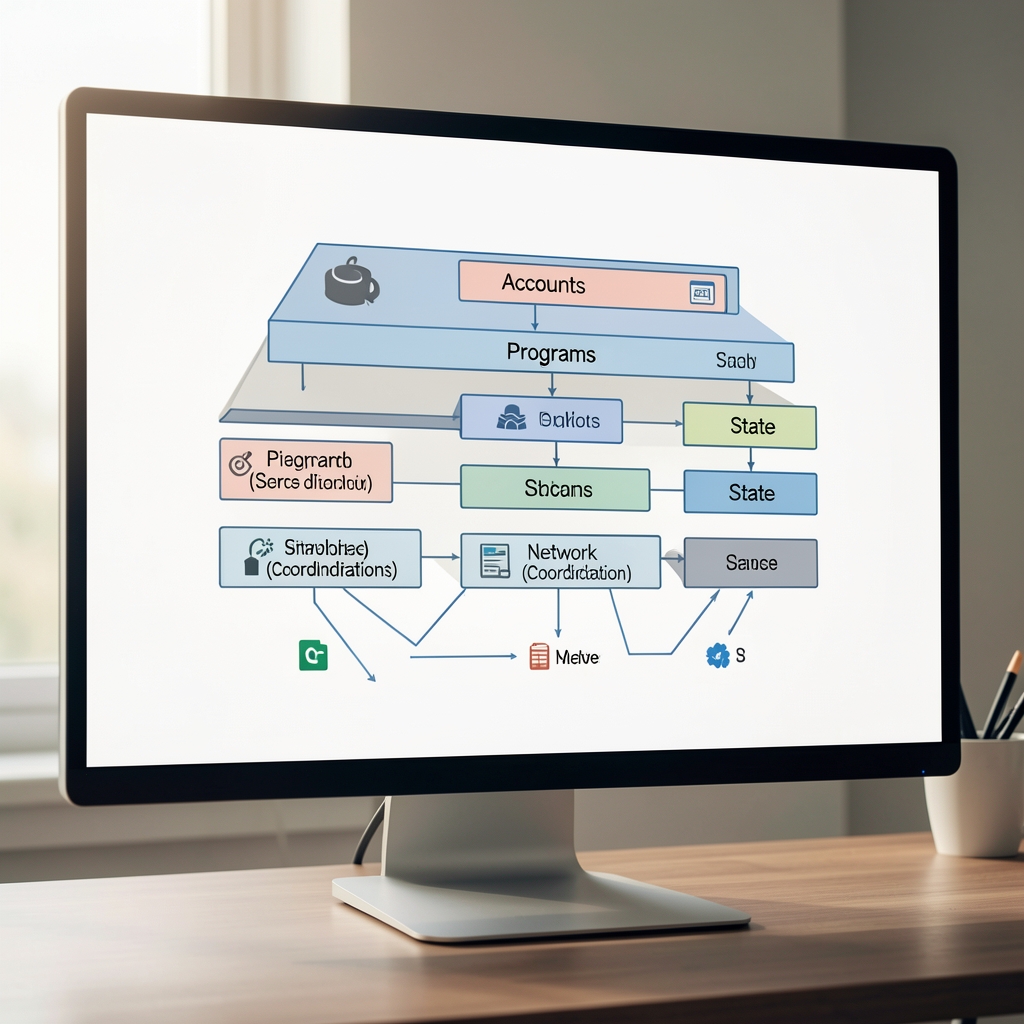
Records hold information that programs and clients read or update under defined permissions.
SYSTEMS READING · 2026
Architecture is the arrangement of responsibilities that allows a system to receive requests, interpret instructions, maintain state, coordinate participants, and expose results. Solana Unveiled presents these relationships as a reading map rather than a substitute for implementation documentation.
The most useful architectural questions are often simple: where is data stored, who can change it, how is an action ordered, and what evidence can a reader inspect afterward?
Records hold information that programs and clients read or update under defined permissions.
Programs provide logic for requested actions and establish expectations about inputs and outcomes.
The network must coordinate records so participants can work from a consistent sequence of updates.
| Component | Primary responsibility | What to inspect |
|---|---|---|
| Client | Collects input, sends requests, and presents results. | Endpoint, validation, error handling, and user permissions. |
| Transaction | Describes signed instructions and relevant accounts. | Signers, instructions, identifiers, and status. |
| Program | Interprets instructions and applies defined logic. | Interface, account expectations, and failure behavior. |
| State | Stores records used by future actions. | Ownership, mutability, and update history. |
| Validator layer | Processes and verifies network activity. | Version, participation, observation, and coordination. |
“Architecture becomes readable when a request can be followed from intention to observable result.”— Tymbra architecture note
State is not just a storage detail. It influences permissions, update frequency, recovery, indexing, user experience, and the evidence available when something goes wrong.
| Question | If unclear | Useful next step |
|---|---|---|
| Who can change the record? | Permission behavior may be misunderstood. | Document authority and test rejected actions. |
| What happens if the endpoint is unavailable? | The interface may show an incomplete picture. | Define fallback, retry, and user messaging. |
| How is success verified? | A submitted request may be confused with a completed action. | Use inspectable status and identifiers. |
| Which version applies? | Old explanations may be treated as current. | Record dependencies and update dates. |
Read the developer notes for implementation vocabulary, validators for operational context, and the glossary for concise definitions. Together, these pages show why architecture is both a technical arrangement and a communication task.
Read developer notesReview is strongest when it follows data and authority through the entire request path. Ask what enters the system, how it is validated, where it is stored, who can modify it, and what the user can inspect afterward.
Also consider the ordinary path and the interrupted path. A design that explains success but not rejection, delay, stale data, unavailable endpoints, or version mismatch leaves important behavior undocumented.