Client
The client assembles requests, displays results, manages user interaction, and communicates with a selected endpoint. It should handle unavailable data and rejected requests clearly.
BUILDERS’ READING DESK · 2026
Software development on a distributed network begins with a model of execution. Before choosing a framework or writing an instruction, a developer benefits from understanding accounts, programs, transactions, permissions, state, and the tools used to inspect each step.
This page is an editorial orientation, not a code deployment service or a promise about application outcomes. The examples are conceptual and should be checked against current technical documentation before implementation.
The client assembles requests, displays results, manages user interaction, and communicates with a selected endpoint. It should handle unavailable data and rejected requests clearly.
A program describes logic that can be invoked under defined conditions. Its interfaces, account expectations, and error behavior should be documented for callers.
State is the information an application reads or changes. Designing its ownership and update path carefully helps make behavior easier to inspect.
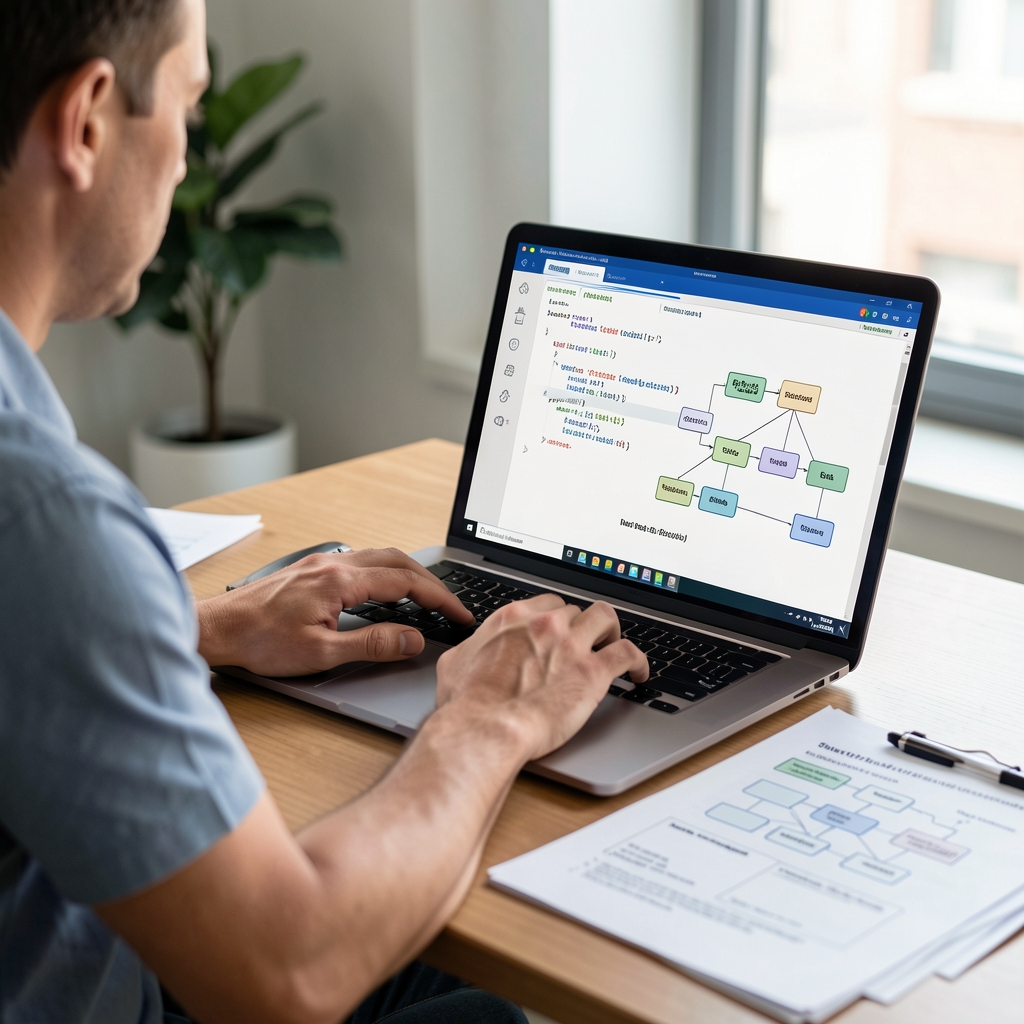
A useful development process moves from a small question to a reproducible observation. Describe the user action, identify the accounts or records involved, define the expected result, and then test the boundary cases.
Inspection is part of development rather than a task reserved for an incident. Logs, transaction views, local tests, and source control each answer a different question.
| Step | Question | Evidence to keep |
|---|---|---|
| 1. Define | What user action should be supported? | Short requirement and acceptance notes. |
| 2. Model | Which records and permissions are involved? | Data diagram and account assumptions. |
| 3. Simulate | What happens with valid and invalid inputs? | Test cases and expected outcomes. |
| 4. Observe | How can a reviewer inspect the result? | Logs, identifiers, and reproducible steps. |
| 5. Document | What must the next developer know? | Interface notes and known limitations. |
“A feature is easier to maintain when another person can explain its data flow without opening the source code first.”— Tymbra developer note
Read the relationship between execution, accounts, state, and network coordination.
Open architectureCheck concise definitions while reading technical documentation.
Open glossaryReview practical questions around keys, permissions, dependencies, and operational exposure.
Open security notesNot always. A short model of the data and permissions can prevent code examples from hiding the important assumptions.
As learning aids. Check current documentation, versions, network settings, and error handling before adapting an example.
A clear environment, inputs, expected output, identifiers, and enough context for another reader to repeat the observation.
A small project becomes easier to review when its interfaces, assumptions, and failure paths are written while the design is still fresh. Keep a short record of why a data shape exists, which permissions it expects, and what a caller should do when an operation is rejected.
Use examples that reveal boundaries rather than hiding them. A useful example includes inputs, expected output, version context, and a note about what it intentionally does not demonstrate.